Why the snorkeling is so good
Coiba National Park was declared a UNESCO World Heritage Site in 2005. According to UNESCO, it is home to 760 species of marine fish, 33 species of sharks and 20 species of whales and dolphins. For most of the 20th century the island was a penal colony, which kept people and development away and helped preserve its forests and reefs.
What you can see
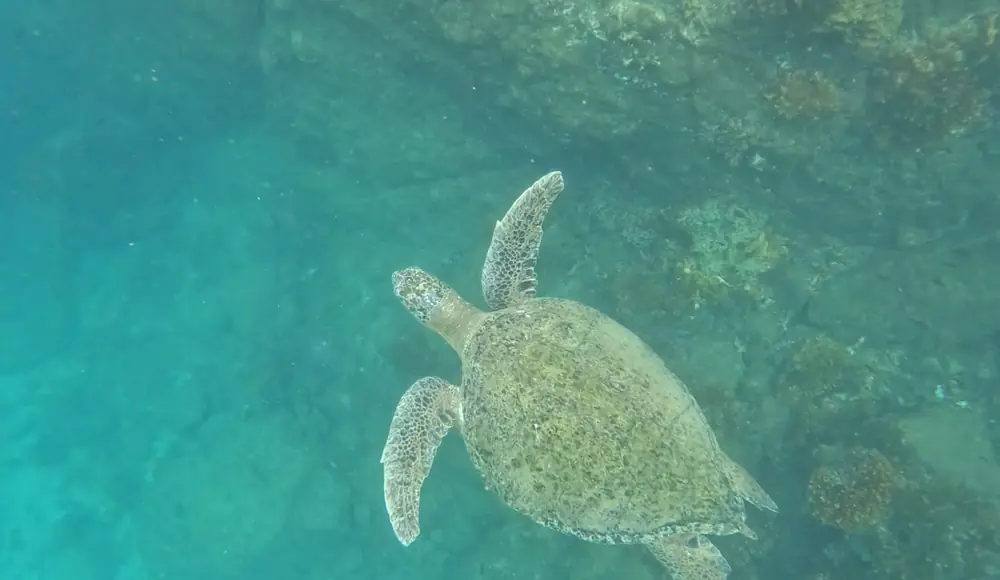
- Sea turtles resting on the reef or coming up to breathe.
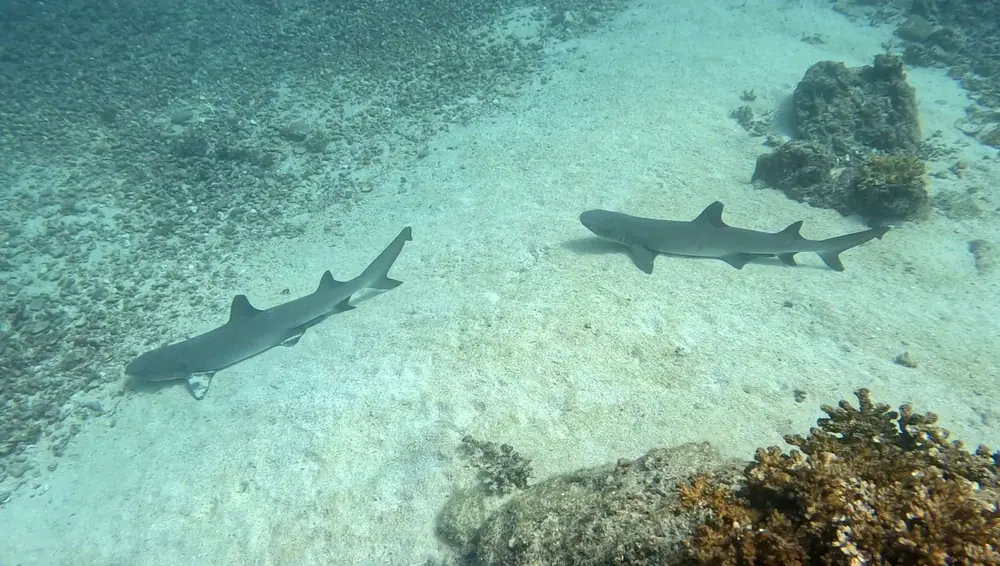
- Whitetip reef sharks, calm sharks that often rest on the sandy bottom.
- Rays and moray eels among the rocks.
- Reef fish such as Moorish idols, pufferfish and big schools of fish.
- Octopuses, if you know where to look.
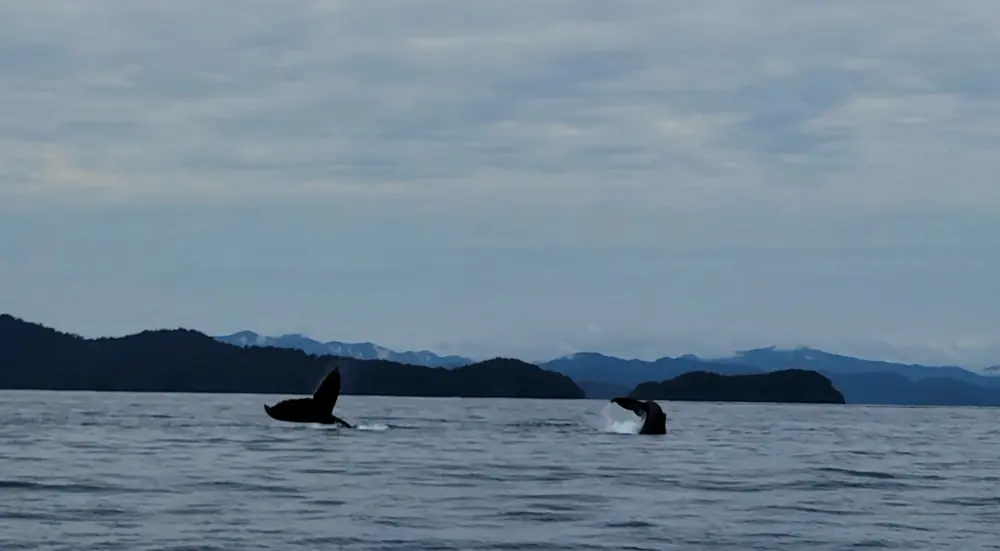
- Some days, dolphins on the way and even a whale shark.
Our snorkel sites
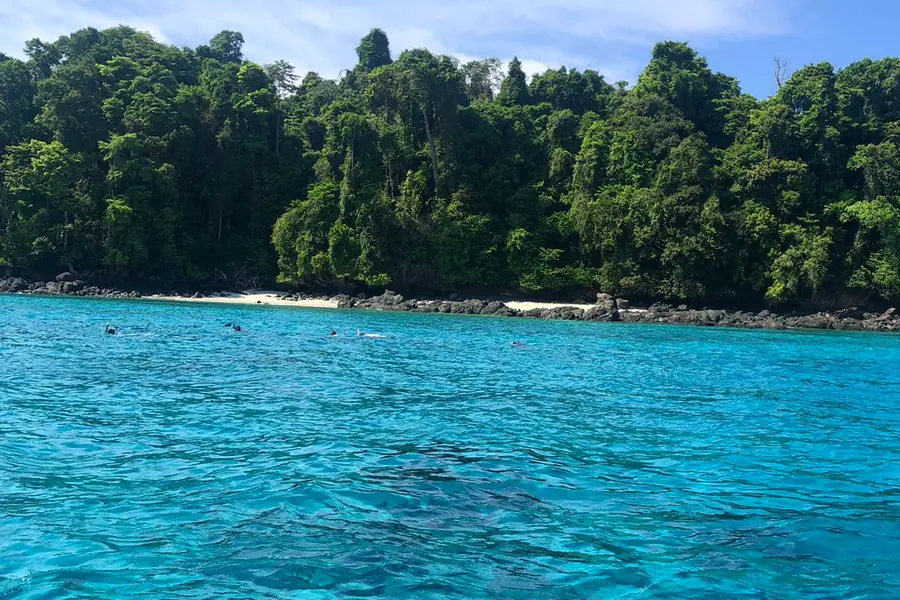
On the Coiba Island Tour we usually snorkel at Coco Pequeño, Coco Grande and Isla Tortuga. The captain and guide choose the sites each morning depending on the tide, visibility and sea conditions.
Tips for first-time snorkelers
- Life jackets are included, so you can float without effort.
- Test your mask on the boat: a good seal matters more than anything.
- Breathe slowly through the snorkel and keep your face relaxed.
- Stay close to your guide; they'll show you where to look.
- Never touch or stand on the coral, and don't touch the animals.
Can I snorkel if I can't swim?
Yes. With a life jacket and your guide next to you, you can enjoy the reef from the surface. Tell us when you book so we can plan for it.
What to bring
- Reef-safe sunscreen and a long-sleeve shirt or rash guard
- A waterproof camera or GoPro for underwater photos
- A towel and a waterproof bag for your phone
Ready to see Coiba?
Tell us your date and how many people are coming. We confirm availability and the price on WhatsApp.